Selecting between a master-planned suburb and an urban boutique building dictates rental liquidity, tenant demographics, and total maintenance overhead.
Strategic Distinction
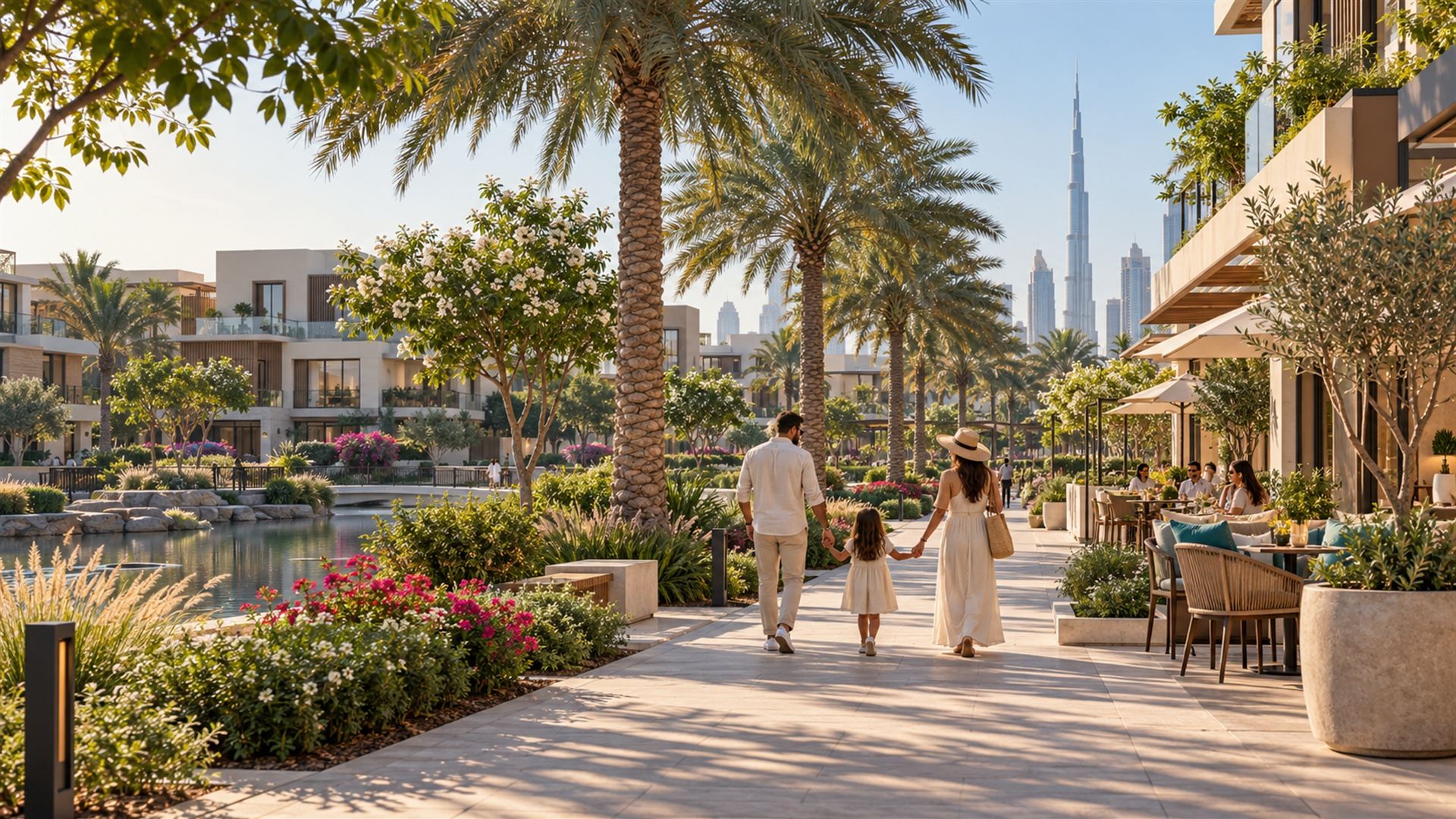
Master-Planned Communities: Built upon sovereign-scale infrastructure, integrated parks, schools, and family lifestyle retail. Best suited for multi-year capital compounding, high tenant retention, and long-term capital preservation.
Urban Boutique Infills: Built inside established or central infill pockets. Best suited for lower entry prices, rapid construction turnarounds, lower service charges, and elevated immediate gross rental yields (8% to 10%).
Master Communities: Long-Term Equity Compounding
Master communities offer self-contained ecosystems with integrated retail, healthcare, schools, and parks.
The Demographic Anchor: Attracts high-income expatriate families and long-term corporate executives who value school proximity and community amenities. Tenant retention is significantly higher, reducing annual void periods.
Capital Appreciation Drivers: Master communities experience compounded appreciation as successive phases launch at higher price tiers. Early-phase buyers in mature master developments frequently observe substantial equity expansion upon full community handover.
The Trade-Off: Higher entry thresholds per square foot and initial construction disruption as neighboring clusters are built out over 5–10 year master timelines.
Standalone boutique residences maximize net rental return on deployed capital:
Lower Price-Per-Square-Foot Entry: Infill buildings in mature or semi-mature districts often price 20% to 35% below adjacent master developments, allowing private landlords to optimize yield percentages.
Streamlined Facilities: Boutique towers featuring focused amenities (gymnasium, infinity pool, co-working lounge) keep service charges lower—often between AED 12 and AED 16 per sq. ft., directly boosting net returns.
Short-Term Rental Viability: Boutique units positioned near transit hubs or key commercial districts perform exceptionally well on short-term corporate leasing models, producing gross returns between 9% and 11%.
Metric / Dimension
Master-Planned Community
Boutique Urban Residence
Average Gross Yield
6.0% – 7.2%
7.8% – 9.8%
Capital Appreciation Pace
High (5–8 Year Horizon)
Moderate to High (Short Burst)
Average Service Charges
AED 16 – AED 26 / sq. ft.
AED 11 – AED 16 / sq. ft.
Target Tenant Profile
Families, Senior Executives
Young Professionals, Freelancers
Exit Liquidity
Broad Institutional & End-User
Retail Investor & Local Landlord
Strategic Portfolio Allocation
A balanced real estate portfolio typically allocates 60% of capital into prime master-planned villa or townhouse developments for wealth preservation and capital growth, while deploying 40% into high-yielding boutique apartments to generate liquidity and cash flow.

 Home Hills Properties